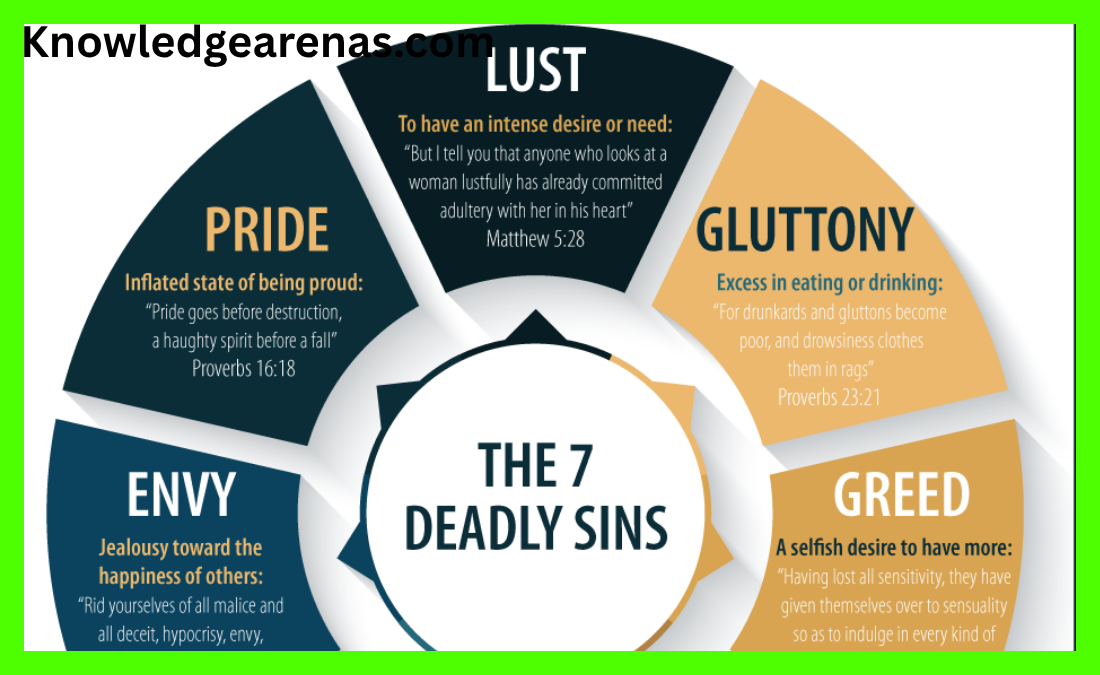
The Bible never gives a single list titled “the seven deadly sins.” Yet the seven names—pride, greed, lust, envy, gluttony, wrath and sloth—have become deeply associated with Christian teaching.
That creates a question worth examining: if the Bible does not list them together, where did the seven deadly sins come from, and what does Scripture actually say about them?
The Seven Deadly Sins Are Not Listed Together in the Bible
The first fact is the most important.
There is no passage in the Bible that presents exactly seven sins under the heading “deadly sins.” Instead, the seven-sin framework developed through early Christian teaching and later became an established part of Christian tradition.
The Bible does, however, repeatedly condemn behaviors and attitudes that correspond closely with the traditional seven.
For example, Proverbs 6:16–19 describes seven things the Lord hates. The list includes “a proud look,” a lying tongue, hands that shed innocent blood, a heart that devises wicked plans, feet that run toward evil, a false witness and someone who causes conflict among others.
That passage is sometimes confused with the seven deadly sins. It is not the same list.
So, What Are the 7 Deadly Sins?
The traditional seven are:
- Pride
- Greed
- Lust
- Envy
- Gluttony
- Wrath
- Sloth
They are often described as “deadly” because Christian theology traditionally regards them as destructive root tendencies that can lead to other sins.
But the precise seven-part system was developed after the biblical texts were written.
1. Pride
Pride is generally understood as excessive self-importance or placing oneself above God and others.
The Bible repeatedly warns about pride. Proverbs 16:18 famously connects pride with destruction, while James 4:6 states that “God opposes the proud but gives grace to the humble.”
The biblical concern goes beyond ordinary confidence. The issue is an attitude that rejects humility and places the self above proper dependence on God.
2. Greed
Greed, sometimes called avarice, concerns an excessive desire for wealth or possessions.
Jesus directly warned against it in Luke 12:15: “Watch out! Be on your guard against all kinds of greed.” He then explained that a person’s life does not consist in the abundance of possessions.
The Bible does not present wealth itself as automatically sinful. Its warnings focus on the heart’s relationship with money and material possessions.
3. Lust
Lust traditionally refers to an uncontrolled or improper sexual desire.
Jesus addresses the subject in Matthew 5:27–28, teaching that looking at another person with lustful intent can itself involve adultery in the heart.
That distinction matters. Biblical teaching on sexual morality is broader than simply the modern meaning of the word “lust.”
4. Envy
Envy involves resentment or discontent because another person possesses something desirable.
The Bible repeatedly warns against jealousy and covetousness. Galatians 5:19–21 includes jealousy and envy among behaviors associated with sinful living.
The problem is not simply noticing that someone has something desirable. It is allowing that desire to become resentment or a destructive attitude toward another person.
5. Gluttony
Gluttony is traditionally associated with excessive consumption, especially food and drink.
The Bible contains numerous warnings about uncontrolled appetite. Proverbs 23:20–21, for example, warns against excessive indulgence and describes the consequences of overindulgence.
However, Scripture does not provide a simple formula saying that enjoying food is sinful. The traditional concept concerns excess and lack of self-control.
6. Wrath
Wrath is commonly understood as uncontrolled anger or rage.
The Bible makes an important distinction between anger itself and destructive anger. Ephesians 4:26 says, “In your anger do not sin,” while the surrounding passage encourages believers to abandon bitterness, rage and malicious behavior.
This means anger is not automatically treated as identical to sin. The biblical concern is what anger becomes and what a person does because of it.
7. Sloth
Sloth is traditionally associated with spiritual apathy, laziness or unwillingness to fulfill one’s responsibilities.
Proverbs contains repeated warnings about laziness, including Proverbs 6:6–11, which uses the example of the ant to encourage diligence.
In Christian tradition, however, sloth can carry a deeper meaning than simply being physically lazy. It can refer to spiritual indifference or a lack of willingness to pursue one’s responsibilities toward God and others.
Where Did the Seven-Sin System Come From?
The story becomes more complicated here.
Early Christian writers developed systems for classifying destructive thoughts and behaviors. One important figure was the fourth-century monk Evagrius Ponticus, who wrote about eight principal evil thoughts.
Later, John Cassian helped transmit this tradition to Western Christianity. In the sixth century, Pope Gregory I reorganized the categories, eventually contributing to the tradition that became the familiar seven.
The modern seven therefore represent a development in Christian theological tradition rather than a list directly copied from one biblical chapter.
What Does the Bible Actually Say?
The Bible contains many different lists of sinful behaviors.
Galatians 5:19–21 names acts including sexual immorality, jealousy, anger, selfish ambition and envy. Mark 7:21–23 records Jesus listing various evil thoughts and actions that come from within a person.
These passages show why the seven deadly sins can be useful as a teaching framework. They group recurring biblical warnings into seven broad categories.
But saying that the Bible itself presents exactly seven deadly sins would be historically inaccurate.
The Bottom Line
The seven deadly sins are pride, greed, lust, envy, gluttony, wrath and sloth. They are firmly established in Christian tradition, and each has connections to themes found throughout the Bible.
But there is no biblical passage that officially presents those seven as one complete list.
The distinction matters. The seven deadly sins are best understood as a later Christian framework for discussing recurring forms of sinful behavior and attitudes—not as a list directly written in the Bible.
Author Bio
James Carter is a religion and culture writer covering biblical history, Christian traditions and the development of religious ideas. His work focuses on separating established textual evidence from later interpretations and popular assumptions.
About the Author