Christmas is more than the twinkling lights and beautifully wrapped packages, more than the gathering of loved ones for holiday feasts. Christmas, for Christians, is about the birth of Jesus Christ and the overwhelming message of hope, peace, love, and salvation associated with his arrival! It is a story that is woven through prophecy, spread across a few precious biblical narratives (those of Matthew and Luke) and discussed in various sections devoted to outlining just why the Messiah’s appearance was so crucial.
Searching for inspiring Christmas Bible verses this Advent season that can be read as part of family study, put in a Christmas card or prayed over during your daily devotion?
I have pulled out many of them for you here that together weave together the promise of the Messiah with the circumstances surrounding His arrival:
Isaiah 7:14 — The Promise of Immanuel
One of the most widely known Christmas Old Testament passages is Isaiah 7:14, and it’s the prophecy about the sign of the birth of a child. The woman will bear a son who will be named Immanuel and this name means ‘God is with us.’ Matthew links this prophet’s warning about the birth of the savior.
Isaiah 9:6 — A Child Is Born
One of the very popular Christmas bible verses has come out of Isaiah 9:6 which tells us that a child will be born who is called Wonderful, Counselor, Mighty God, Everlasting Father and Prince of Peace. This verse is one that reminds believers how our coming Messiah means so much.
Micah 5:2 — Bethlehem and the Messiah
Micah 5:2 points to Bethlehem as the place from which a ruler would come for Israel. This passage is particularly important when reading the Christmas story because Matthew connects Bethlehem with Jesus’ birth.
Luke 1:30–31 — The Angel’s Announcement
Luke records the angel Gabriel telling Mary not to be afraid and announcing that she would have a son named Jesus. This moment begins the New Testament account of the miraculous birth and highlights Mary’s role in the Christmas story.
Luke 2:7 — Jesus Is Born
Luke 2:7 gives one of the most recognizable scenes in Christmas Bible Verses: Mary gives birth to Jesus, wraps Him in cloths, and lays Him in a manger. The humble setting contrasts with the enormous significance Christians attach to His birth.
Luke 2:10–11 — Good News of Great Joy
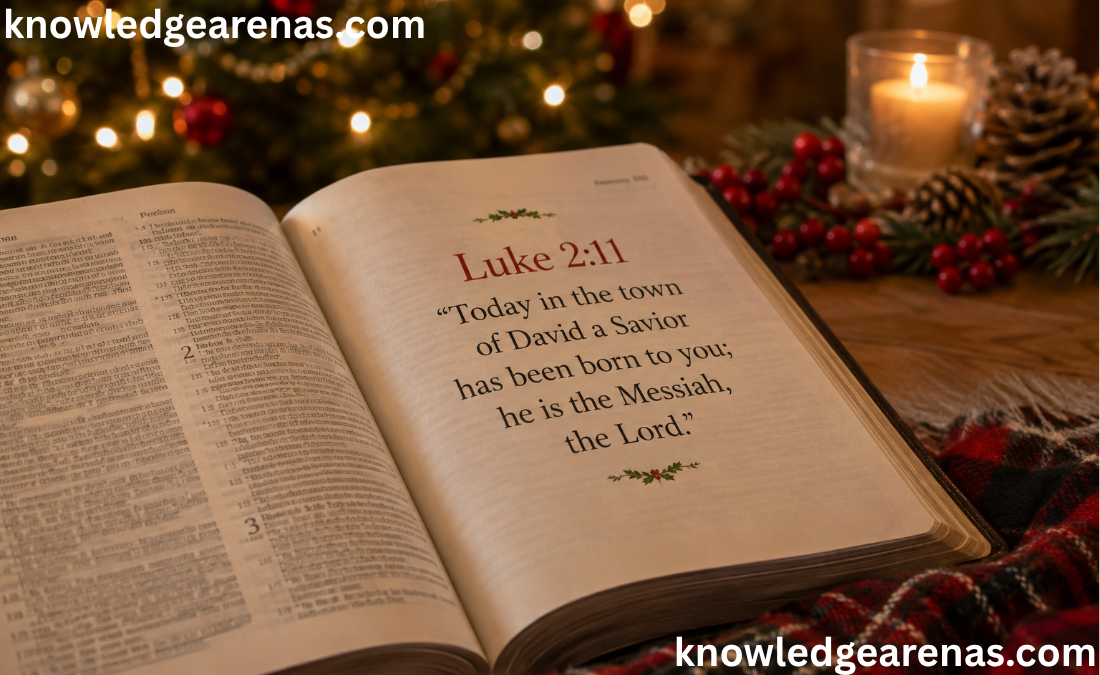
The angel’s announcement to the shepherds is central to the Christmas message. The birth of Jesus is described as good news and great joy, with the child identified as the Savior, Christ, and Lord. This passage remains one of the most frequently remembered Christmas Scriptures.
Luke 2:13–14 — Glory and Peace
The heavenly announcement continues with praise to God and a message of peace. These verses are especially meaningful for Christmas services, family readings, and personal devotion because they connect Christ’s birth with worship and peace.
Matthew 1:21 — The Meaning of Jesus’ Name
Matthew 1:21 explains that Mary would give birth to a son and that His name would be Jesus because He would save His people from their sins. It provides an important explanation of why Christians regard the birth of Christ as more than an ordinary birth.
Matthew 1:23 — God With Us
Matthew refers to the promised child as Immanuel, emphasizing the Christian belief that God’s presence is revealed through Christ. This verse is often included among Christmas Bible Verses because it captures the central theme of God’s nearness.
Matthew 2:10–11 — The Wise Men Worship Jesus
Matthew’s account describes the Magi arriving after Jesus’ birth and worshiping Him. Their gifts of gold, frankincense, and myrrh have become an important part of the traditional Christmas story.
John 1:1–5 — Light in the Darkness
John approaches Christmas differently from Matthew and Luke. Rather than beginning with Bethlehem, John describes the eternal Word and presents themes of life and light. The passage gives Christmas a broader theological meaning by connecting Christ with God’s eternal work.
John 1:14 — The Word Became Flesh
John 1:14 is another powerful passage for Christmas Bible Verses because it focuses on the incarnation—the Christian belief that the Word became flesh and lived among humanity. It points beyond the manger to the identity and mission of Jesus.
John 3:16 — God’s Gift of Love
Although John 3:16 is not specifically a birth narrative, its message fits naturally with Christmas. The verse emphasizes God’s love and the gift of His Son, helping readers connect the celebration of Christ’s birth with the larger Christian message of salvation.
More Meaningful Christmas Bible Verses to Read
Other passages worth exploring include Luke 1:46–55, Luke 1:68–79, Luke 2:1–20, Matthew 2:1–12, Philippians 2:5–11, Galatians 4:4–5, Titus 2:11–14, and 1 John 4:9–10. These passages broaden the Christmas story by exploring praise, humility, salvation, God’s grace, and His love.
The Christmas story is not contained in a single verse. Matthew emphasizes Joseph, the Magi, and the fulfillment of prophecy, while Luke gives particular attention to Mary, the shepherds, the angels, and the manger. Reading both accounts gives a fuller picture of the events surrounding Jesus’ birth.
How to Use Christmas Bible Verses
Christmas Bible Verses can be used in many meaningful ways. Families can read a short passage together before Christmas dinner, churches can include Scripture in Advent services, and individuals can use selected verses for morning prayer or personal reflection. Short passages can also provide thoughtful messages for Christmas cards and family greetings.
For children, simple verses such as Luke 2:11 can introduce the central message of Christmas. Families can read one passage each day during December, gradually moving from Old Testament prophecy to the birth narratives in Matthew and Luke.
Why Christmas Bible Verses Still Matter
The enduring appeal of Christmas Bible Verses comes from the themes they communicate. Hope appears in prophecy, joy appears in the angelic announcement, humility appears in the manger, and peace appears throughout the Christmas message. These themes remain relevant even when the holiday season becomes busy or commercialized.
Most importantly, Scripture encourages readers to look beyond Christmas traditions and consider the person at the center of the celebration. The biblical accounts invite reflection on who Jesus is and why His birth matters to Christian faith.
Conclusion
The most meaningful Christmas Bible Verses take readers from ancient promises to the birth of Jesus and ultimately toward the Christian message of salvation. Isaiah points toward the promised child, Matthew and Luke recount the Nativity, and John explores the deeper meaning of Christ coming into the world. Reading these passages during Christmas can turn a familiar holiday tradition into a time of reflection, worship, gratitude, and hope.
FAQs
What is the most popular Christmas Bible verse?
Luke 2:11 is one of the most recognizable Christmas passages because it announces the birth of the Savior, Christ the Lord.
Where is the Christmas story found in the Bible?
The main birth narratives appear in Matthew 1–2 and Luke 1–2. Each Gospel presents the events from a different perspective.
What Bible verse talks about a child being born?
Isaiah 9:6 says, “For to us a child is born, to us a son is given,” making it a particularly significant Christmas passage.
What Christmas Bible Verses are good for families?
Luke 2:1–20, Matthew 1:18–25, and Isaiah 9:6 are excellent choices for a family Christmas reading because they cover the birth, meaning, and promise surrounding Jesus.
What is a good Christmas verse about peace?
Isaiah 9:6 is especially meaningful because it identifies the promised child as the “Prince of Peace,” connecting the Christmas message with hope and peace.
About the Author